Facilitator
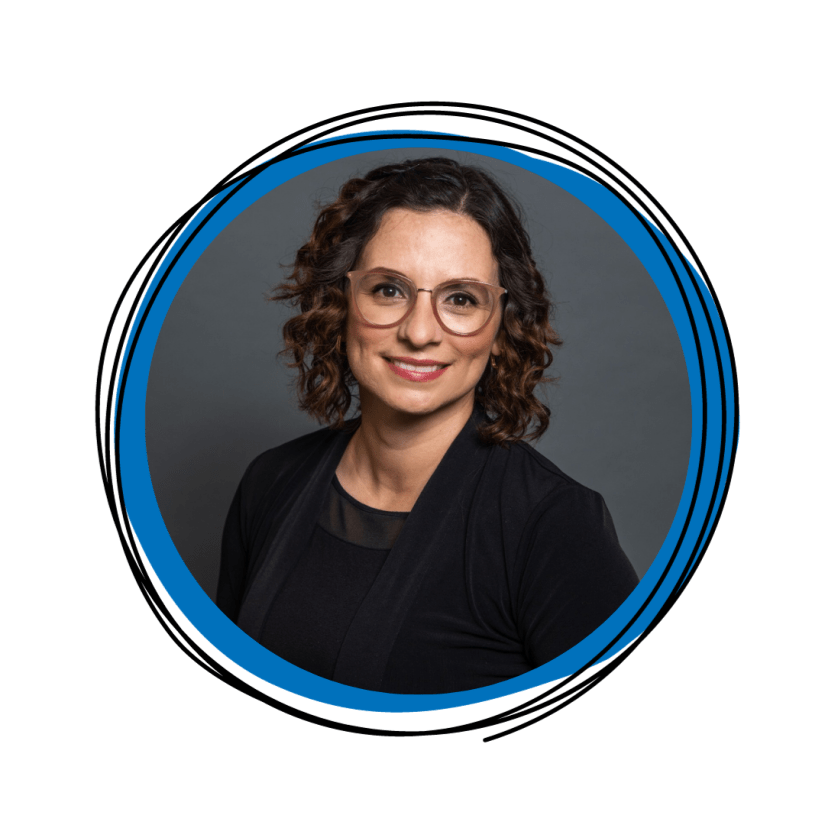
Sindia M. Rivera-Jiménez, Ph.D.
University of Florida (Research Website)
This workshop has been offered:
- April 26, 2024 at UF Chemical Engineering Peer Advisors General Body Meeting
For questions or comments: rivera.jimenez@eng.ufl.edu
Purpose
This workshop is a strategic initiative aimed at broadening participation in engineering by empowering peer mentors in engineering and computer science by recognizing their pivotal role in fostering academic success within the higher education ecosystem. The workshop draws upon Dr. Rivera-Jiménez’s research on the success of transfer students, particularly those from underserved populations, to inform its content and approach. Additionally, she leverages her experiences as faculty (since 2011) at a Hispanic Serving Institution, a Community College, and currently at a public research-intensive institution.
Format: By engaging in interactive activities and discussions, participants gain insights into effective peer mentoring practices and develop essential skills to cultivate supportive relationships with their mentees.
Workshop Objectives
- Introduce the Academic Advising Continuum: Familiarize participants with the Academic Advising Continuum as a practical tool for navigating advising discourse and fostering inclusive conversations.
- Explore Advising Practices: Engage participants in exploratory discussions to understand the complexities of advising practices, focusing on the why and how of advising, and encourage them to articulate their perspectives.
- Identify Areas for Improvement: Facilitate discussions to collaboratively identify areas for improvement in advising practices, utilizing the insights gained from exploring diverse perspectives and utilizing the continuum as a reflective tool.
Workshop Resources
1️⃣ Download the most recent copy of slides used:
2️⃣ Access Activity Handout:
Workshop References:
- Board on Science Education, Board on Higher Education and Workforce, National Academy of Engineering, & National Academies of Sciences, Engineering, and Medicine. (2022). Imagining the Future of Undergraduate STEM Education: Proceedings of a Virtual Symposium (K. Brenner, A. Beatty, & J. Alper, Eds.; p. 26314). National Academies Press. https://doi.org/10.17226/26314
- Committee on Understanding the Engineering Education-Workforce Continuum & National Academy of Engineering. (2018). Understanding the Educational and Career Pathways of Engineers (p. 25284). National Academies Press. https://doi.org/10.17226/25284
- Committee on Increasing the Number of Women in Science, Technology, Engineering, Mathematics, and Medicine (STEMM), Committee on Women in Science, Engineering, and Medicine, Policy and Global Affairs, & National Academies of Sciences, Engineering, and Medicine. (2020). Promising Practices for Addressing the Underrepresentation of Women in Science, Engineering, and Medicine: Opening Doors: Proceedings of a Symposium—in Brief (J. Saunders, Ed.; p. 25785). National Academies Press. https://doi.org/10.17226/25785
- Dika, S. L., Wang, Y., D’Amico, M. M., Serrata, C., & Bohlig, E. M. (2023). A Critical Examination of Perceptions of Supportive Institutional Environment Among Transfer-Seeking Community College Students. Community College Journal of Research and Practice, 0(0), 1–18. https://doi.org/10.1080/10668926.2023.2215202
- Committee on Developing Indicators for Undergraduate STEM Education, Board on Science Education, Division of Behavioral and Social Sciences and Education, & National Academies of Sciences, Engineering, and Medicine. (2018). Indicators for Monitoring Undergraduate STEM Education (M. B. Rosenberg, M. L. Hilton, & K. A. Dibner, Eds.; p. 24943). National Academies Press. https://doi.org/10.17226/24943
- Grey, D., & van den Wijngaard, O. (2023). The Academic Advising Continuum: A Tool for Reflecting on the How and Why of Advising. The Mentor: Innovative Scholarship on Academic Advising, 25, 23-35.
- Sedlacek, W. E. (1991). Using Noncognitive Variables in Advising Nontraditional Students. NACADA Journal, 11(1), 75–82. https://doi.org/10.12930/0271-9517-11.1.75
- Zhang, Y. L., & Dinh, T. V. (2017). Advising International Students in Engineering Programs: Academic Advisors’ Perceptions of Intercultural Communication Competence. NACADA Journal, 37(2), 33–43. https://doi.org/10.12930/NACADA-15-028
 theengineeringprofessor.org